
Feasibility for a Small Residential Development: The Arithmetic Before the Architect
How to run a small residential feasibility study: residual land value, build cost, professional fees, contingency, finance and sensitivity, with a worked example.
Renovations rarely fail because of one disaster. They fail through a hundred small, unrecorded decisions that each added a week and a few thousand.

Ask anyone who has renovated a house what went wrong and you will usually hear the same three things: it cost more, it took longer, and the extra money went somewhere nobody can quite remember. The causes are rarely dramatic. A late decision about tiles, a wall that turned out to be load-bearing, a supplier delay, a "while we are here" addition. Each is small. Together they consume the contingency and the goodwill.
The remedy is not a better builder, although a good one helps. It is a control system: a frozen scope, a real contingency, a written variation process and a schedule that reflects the actual sequence of trades. None of it is glamorous, and all of it is cheaper than a dispute.
"Renovate the ground floor" is not a scope. A usable scope lists rooms, works, finishes, fixtures and exclusions. It says whether the kitchen is being replaced or refaced, whether the wiring is being renewed or extended, whether the garden is included, and who is responsible for building control. It also states what is explicitly not included, because exclusions cause as many arguments as inclusions.
Write the scope with your contractor, not at them. A builder who has walked the site and contributed to the list is more likely to price it accurately and less likely to claim later that something was never included. Attach drawings, a specification and a schedule of works to the contract so there is a single reference document.
A renovation budget should have four layers: construction, professional fees, statutory costs and the cost of living elsewhere if the house is uninhabitable. Most homeowners budget only the first and are surprised by the rest.
Construction includes the builder's price, plus items the builder excludes, such as kitchen appliances, sanitaryware, lighting, decoration, landscaping and cleaning. Professional fees include design, structural engineering, party wall, building control and project management. Statutory costs include planning and building regulation fees, and any contributions. The fourth layer is easy to forget and can be substantial.
Then add contingency. Ten percent is a minimum for a straightforward cosmetic renovation; fifteen to twenty percent is realistic once structural work, damp, services or an older building are involved. Contingency is not a slush fund for upgrades. It is the price of uncertainty.
A provisional sum is an allowance for work that cannot yet be priced precisely. It is legitimate, but it is also where budgets quietly drift. Ask for the basis of each allowance, who measures the final quantity and how the rate is applied. Replace provisional sums with fixed prices as soon as the design is settled.
Watch for a contractor who prices everything as a provisional sum and offers a low headline total. The total is not a price; it is an assumption with a number attached. A slightly higher tender with fewer allowances is usually the safer contract.
A variation is any change to the agreed scope, specification, sequence or timing. It does not have to be a grand redesign. Choosing a different tile after the order was placed is a variation. Asking the electrician to add two sockets during second fix is a variation. If it is not recorded, it will appear as a line on the final invoice with no explanation.
A simple variation sheet, kept in a folder with the contract and drawings, prevents most end-of-project arguments. It also gives you a running total, which is the number that actually matters.

Renovation schedules fail when trades are booked by availability rather than by dependency. The reliable order is: strip out, structural work, roof and weatherproofing, first fix services, insulation and plaster, second fix, finishes, decoration, snagging. Some overlap is normal, but finishes should never precede the messy trades.
Build in inspection points. Building control needs to see foundations, damp-proofing, insulation and structural connections before they are covered. If your schedule does not include those inspections and the notice periods, it is not a schedule; it is a wish list.
| Stage | Key dependency | Typical risk |
|---|---|---|
| Strip out | Survey complete, asbestos checked | Hidden defects revealed |
| Structure | Engineer's details approved | Unexpected loads or foundations |
| First fix | Layouts frozen | Late socket and lighting changes |
| Plaster and dry | Services tested | Rushing the drying period |
| Second fix and finishes | Materials on site | Supplier delays, damaged goods |
| Snagging | Clean site, working services | Contractor moving to next job |
Renovations consume cash in bursts. Strip out, structure and first fix are front-loaded; finishes arrive later. If you are living in the house, rent and storage continue throughout. Build a monthly cash-flow forecast and add a buffer, because contractors invoice on progress and suppliers want deposits.
Agree payment terms in the contract. Stage payments tied to completed work are standard. Avoid large upfront payments, and never pay for work that has not been done. Retain a small percentage until snagging is complete, if the contract allows it, so there is an incentive to return.
It will slip. The question is what you do in the first week. Identify whether the delay is on the critical path, meaning it pushes everything after it, or whether it can be absorbed. Then decide between accelerating, resequencing or accepting a later completion date. Doing nothing is a decision with a cost.
Record the cause and the dates. If the delay is caused by the contractor, the contract should provide a mechanism. If it is caused by your late decision, accept it and update the budget. Blame is less useful than a revised plan.
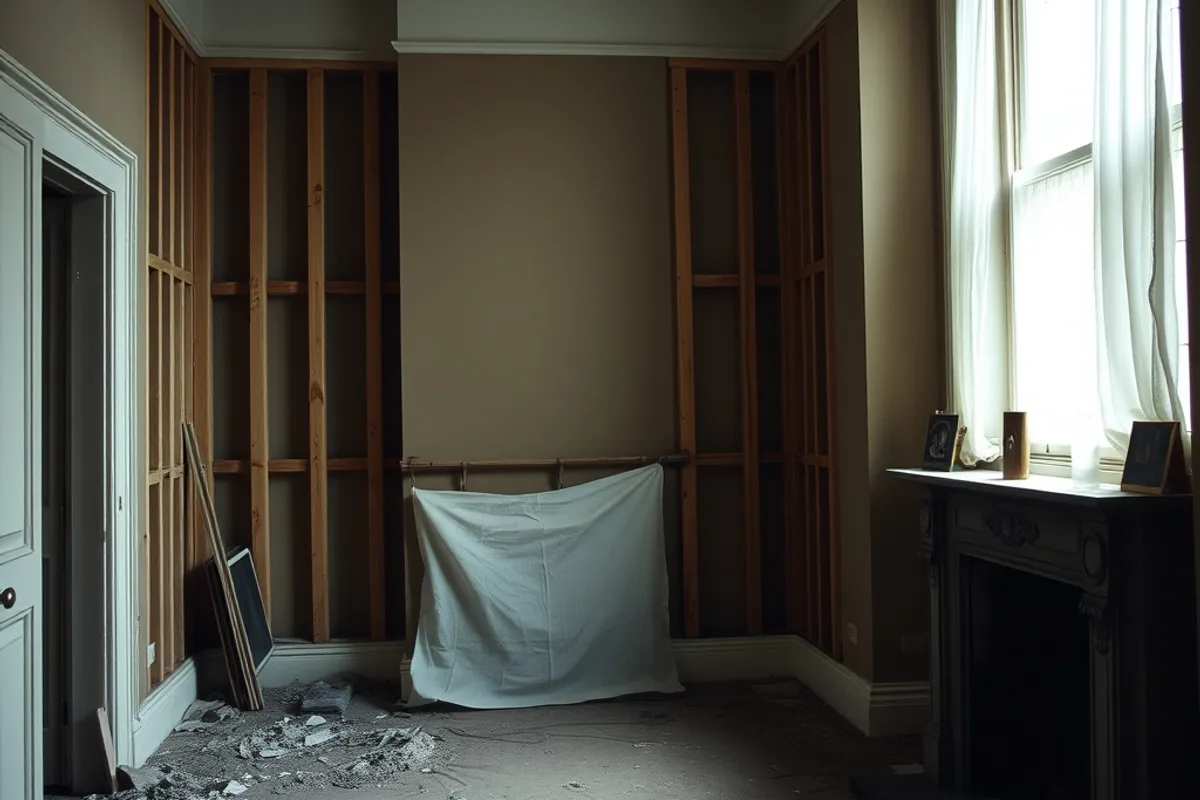
Every renovation has a moment when the house looks worse than when you started. That is not failure. It is the point where the schedule and the budget either hold or quietly stop being true.
A controlled renovation has one scope document, one budget with visible contingency, one schedule with dependencies and inspections, and one variation log. The contractor knows what is included, you know what you have spent, and the final account is a reconciliation rather than a negotiation.
If you cannot describe your project in those four documents, you are not ready to start. Spend another week on paper. It is the cheapest week of the entire build.

Confirm the contract, the insurance, the party wall position if relevant, and the asbestos survey for any building pre-dating the year 2000. Check that the builder's waste carrier registration is current. Photograph every room before work begins; the images are useful for insurance and for remembering where pipes and cables run.
Then accept that the plan will change. The system is not there to prevent change. It is there to make sure every change is a decision you can see, price and afford.